
Walking in Ireland: Discover the Dingle Way and Kerry Way
There’s something quietly compelling about walking in Ireland. Not in a grand, trumpet-blowing sort of way, but in how the landscape reveals itself slowly, day by day. The land feels lived in rather than landscaped: countryside shaped by weather rather than design, lanes that wander because they always have, coastlines that refuse to soften for anyone. Walking here encourages a certain attentiveness – to the light shifting across the Atlantic, to the sound of wind in long grass, to the way villages and farms sit naturally within the terrain rather than apart from it.
For walkers, Ireland offers a rare balance. These are routes with real substance – long days, varying conditions underfoot, and weather that deserves respect – but they are softened by warmth and humanity along the way. A day that ends with tired legs often ends too with a friendly welcome, good food, and a sense that walkers are not passing through as curiosities, but are very much part of the rhythm of the place.
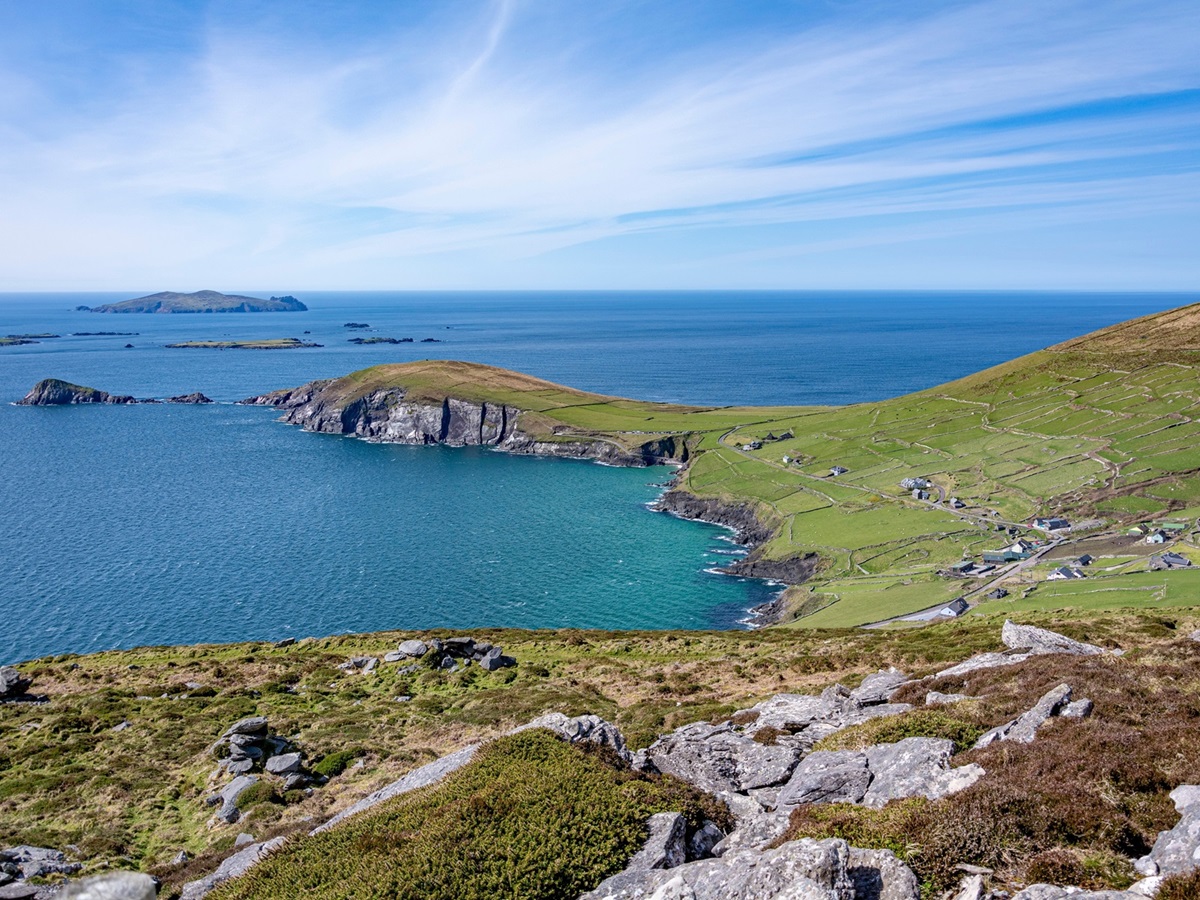
Nowhere is this truer than along Ireland’s southwest coast, where neighbouring peninsulas push out into the Atlantic and deliver some of the country’s most rewarding long-distance walking. Here, culture, language and landscape remain closely intertwined, and progress is measured in miles walked rather than minutes saved. It’s in this corner of the country that two of Ireland’s finest trails take shape – the Dingle Way and the Kerry Way – offering different but complementary ways to experience walking in Ireland at its very best.
Two Neighbouring Peninsulas, Two Distinct Experiences
Although the Dingle Way and the Kerry Way sit on neighbouring peninsulas, and share much in common, they offer distinctly different walking experiences. Both involve long, circular journeys through Atlantic-facing landscapes. Both pass through Gaeltacht areas where the Irish language and cultural traditions remain part of everyday life. And both demand a degree of commitment from the walker, with long days and a rewarding mix of surfaces that range from quiet tarmac lanes to rougher tracks and open hillside. Look a little closer, though, and their individual characters begin to emerge.
The Dingle Way: Atlantic-Edged History and Culture
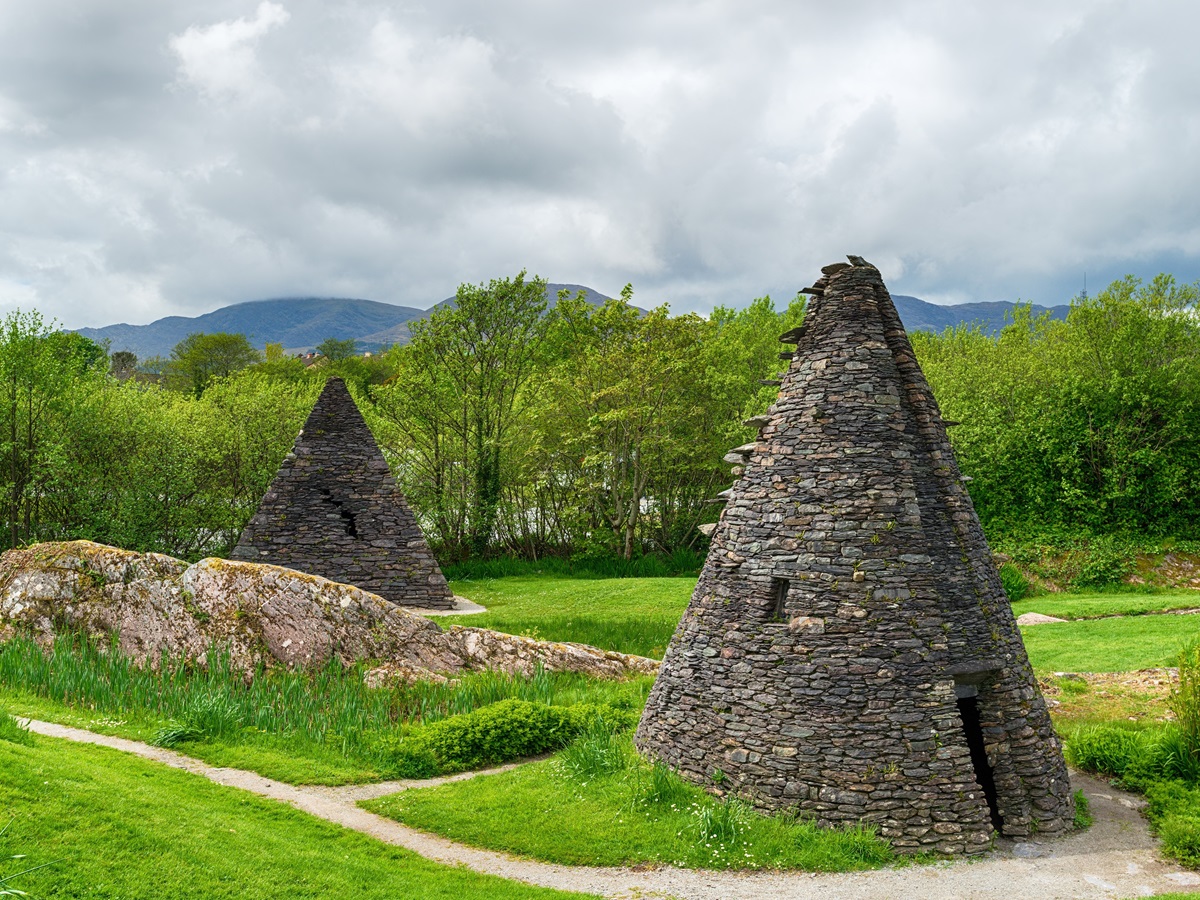
The Dingle Way wraps itself around a peninsula that feels intimate, atmospheric and deeply rooted in the past. Archaeology is never far away here. Standing stones, ring forts and early Christian sites appear almost casually in fields and along hillsides, as if the land simply expects them to be noticed.
The route climbs into the Slieve Mish Mountains, crosses the flanks of Brandon Mountain and drops back to the coast again, delivering a hugely varied and rewarding walking experience. The Atlantic presence is constant. Long sandy beaches stretch out beneath wide skies, while further west the coastline becomes rugged and weather-beaten, with views across to the Blasket Islands lying at the very edge of Europe. This is a landscape shaped more by wind and water than by woodland, yet it is far from austere. In season, the moors and hedgerows are rich with colour, birdlife is abundant, and the sense of space is restorative rather than stark.
There’s also a strong cultural pulse on the Dingle Peninsula. Irish is spoken widely, and traditional music, dance and craft remain woven into daily life rather than preserved behind glass. Relaxed evenings result in good conversation and traditional music drifting across the bar.
The Kerry Way: Lakes, Mountains and Coastal Panoramas
South of Dingle, the Kerry Way offers a broader canvas and a slightly grander scale. One of Ireland’s longest-established walking trails, it makes a full circuit of the Iveragh Peninsula and is often described as a walker’s version of the Ring of Kerry. Where the Dingle Way feels compact, the Kerry Way feels expansive and more varied, moving confidently between mountains, lakes, woodland and coast.
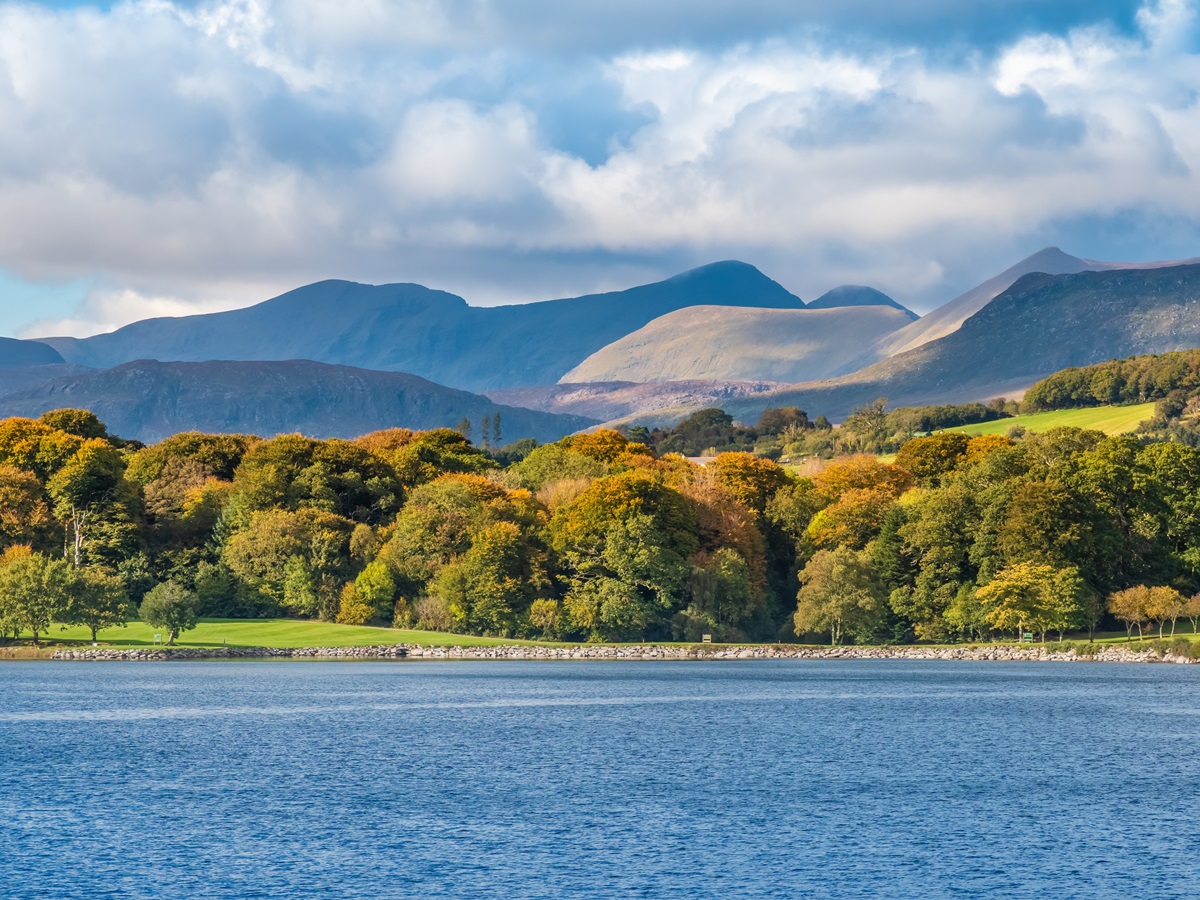
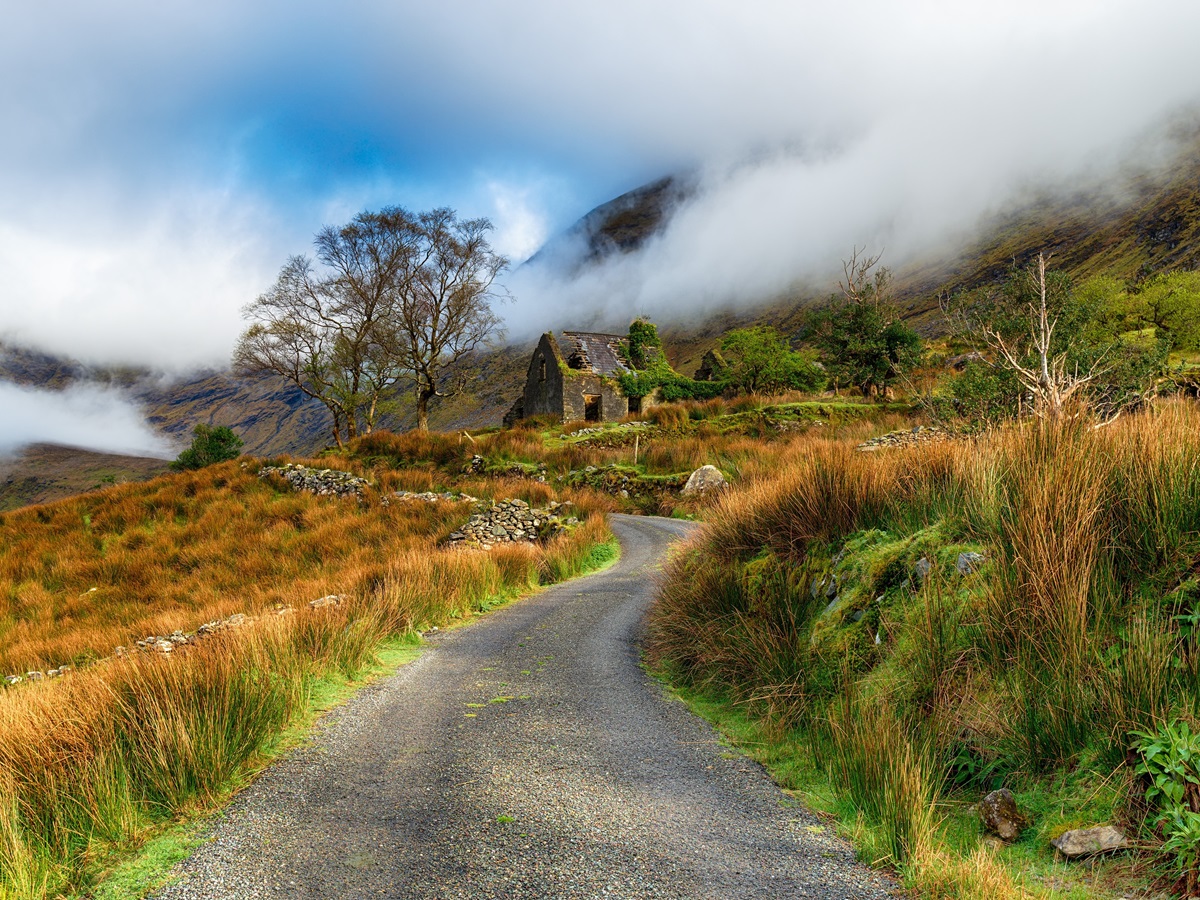
Killarney National Park provides a memorable opening. Ancient oak woods, tumbling waterfalls and the famous lakes. Lough Leane, Muckross Lake and Upper Lake all create a sense of depth and tranquillity that stays with you long after you leave. Further west, the trail passes beneath the dramatic skyline of MacGillycuddy’s Reeks, home to Carrauntoohil, Ireland’s highest mountain. Here, old tracks thread through remote glens dotted with loughs, delivering walking that feels timeless.
As the route swings south, the character changes again. The coastline opens out, revealing turquoise waters, golden sands, rocky headlands and offshore islets that catch the light differently with every passing hour. The variety is one of the Kerry Way’s great strengths – no two consecutive days feel quite the same, yet somehow the journey retains a strong sense of continuity.
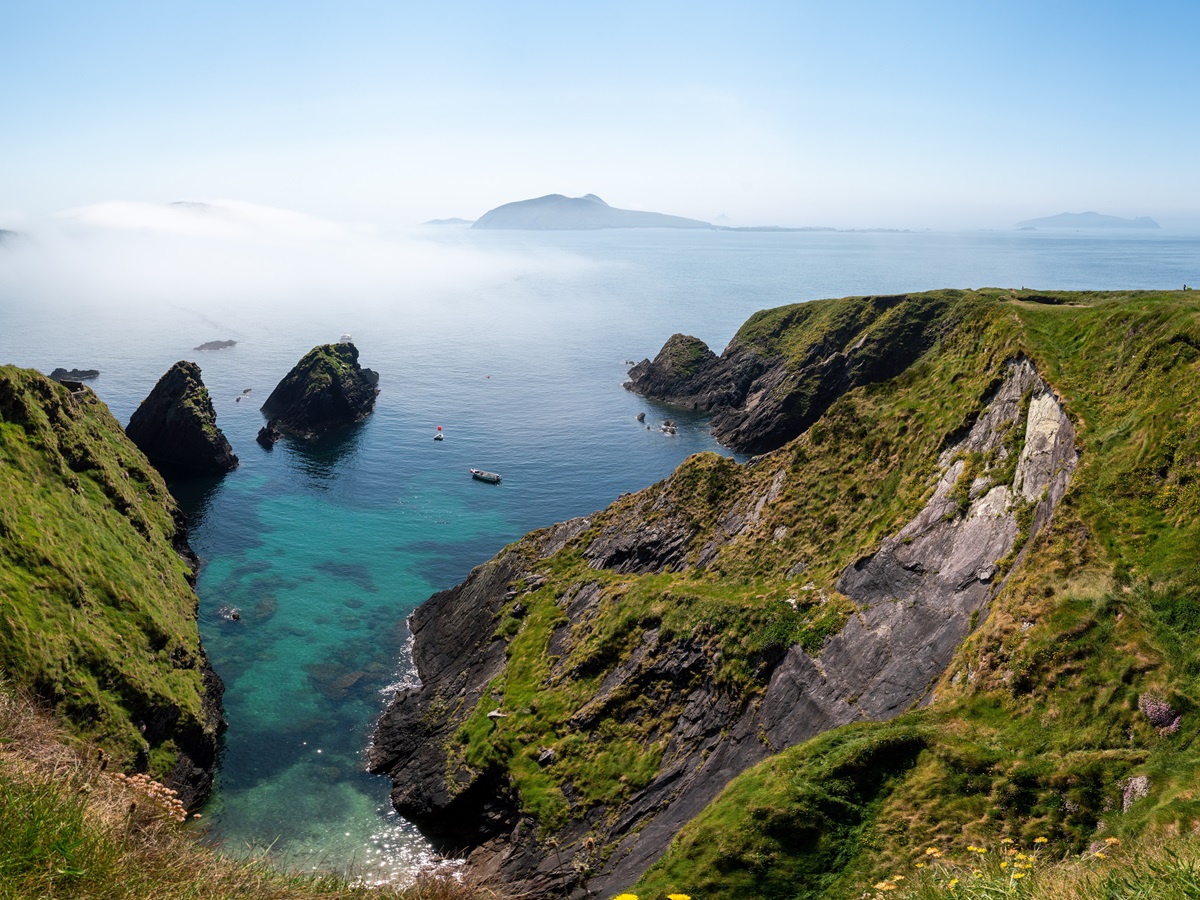
What unites both routes is the nature of the walking itself. These are not gentle strolls strung together, but substantial journeys best suited to walkers who enjoy full days on their feet. Distances are generous, terrain is mixed, and weather plays an active role. But for those prepared to meet them on their own terms, both the Dingle Way and the Kerry Way offer deeply satisfying and immersive experiences.
Ready for a Walking Holiday in Ireland?
Those ready to explore Ireland have an amazing experience in store. The infrastructure is well established, the routes are mature and well waymarked, and the rewards are enduring. Whether drawn to the intimate, Atlantic-edged character of the Dingle Peninsula or the sweeping variety of the Iveragh, walking here is less about ticking off miles and more about settling into a landscape that reveals itself slowly, honestly and with great generosity.
Two neighbouring peninsulas, two outstanding trails, and two very good reasons to consider Ireland for your next long-distance walking holiday. To learn more, simply email us at [email protected] or call us on 017687 72335 to speak with one of our walking holiday experts.
